
Start with the Dimensions Your Order Requires
Platvex Plasticware reviews plastic plate size and shape requirements for importers, wholesalers, private-label brands and foodservice suppliers. Projects begin by checking whether an existing model meets the purchasing specification before considering new tooling.
Send the required diameter or length and width, overall depth, rim profile and intended use. Include target unit weight where available. For compartment plates, identify the number of sections and any important compartment dimensions. These details help us assess suitable models and avoid quoting a plate that looks similar but does not meet your requirements.
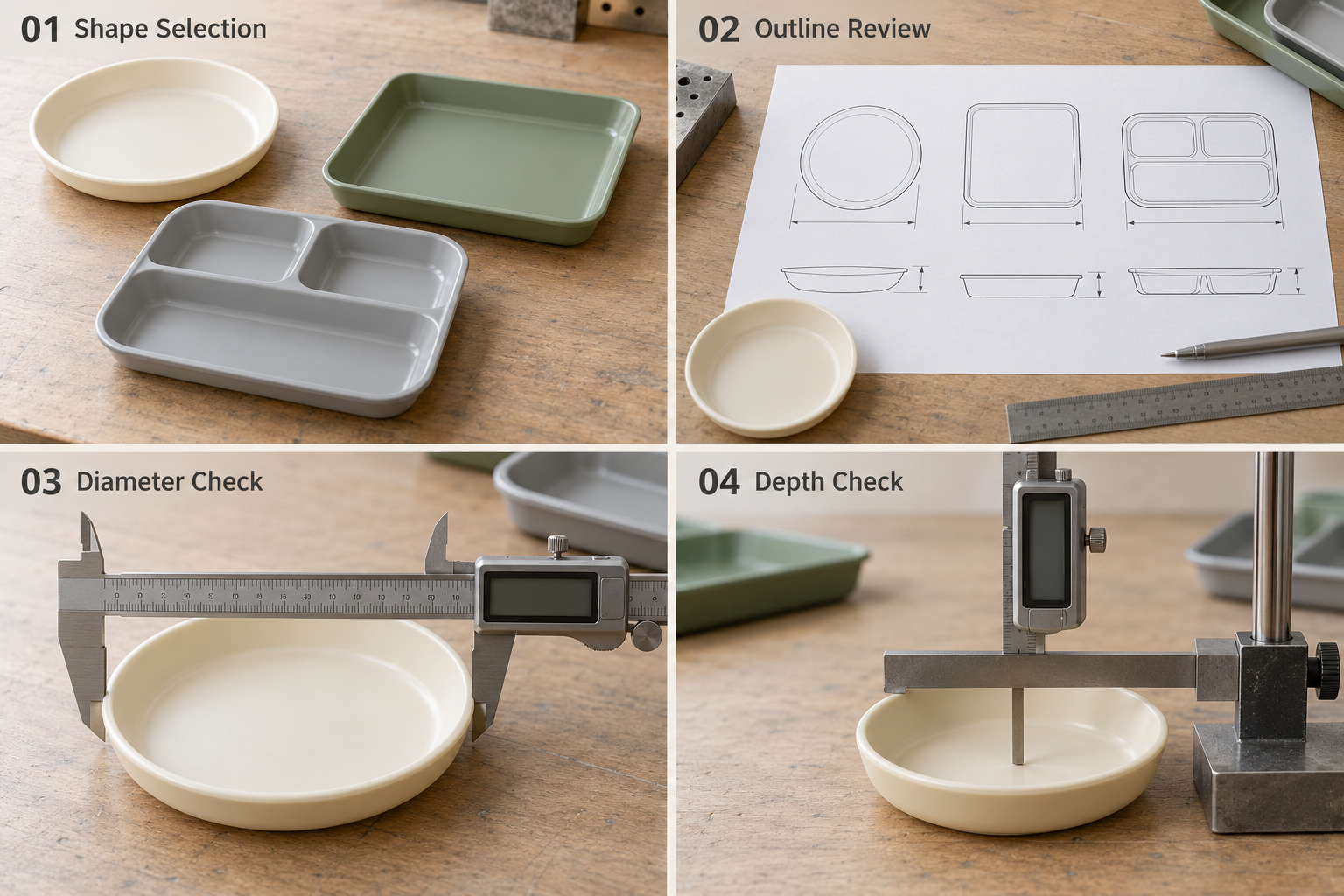 Existing Molds or New Product Development
An existing mold is preferred when its dimensions and structure match your brief. Color, compatible decoration and packaging can then be reviewed without developing a completely new shape.
Changes to diameter, depth, rim geometry or compartment layout may require new tooling. We evaluate selected projects from drawings, specifications or reference samples before confirming feasibility. Our sample and mold development review establishes the development scope, quotation and approval requirements. Very small fully customized orders are generally unsuitable for this route.
Confirm Structure, Material and Unit Weight Together
Plate dimensions should be reviewed alongside material and unit weight. Two plates with similar outer dimensions can differ in depth, wall profile, weight and stacking behavior. A request for a lighter plate therefore needs more than a change to the weight figure.
Describe how the plate will be used, handled and packed. Highlight any required rim shape, base profile or stacking arrangement. Material options are confirmed for the selected product through our material and color review. Thermoplastic and melamine plates follow different production routes, so development requirements are assessed separately.
Drawings, Reference Samples and Approval
A dimensioned drawing is useful for identifying measurements that must be controlled. If only a reference sample is available, specify which features must be retained and which can change. Photographs help with initial discussion but do not establish exact dimensions.
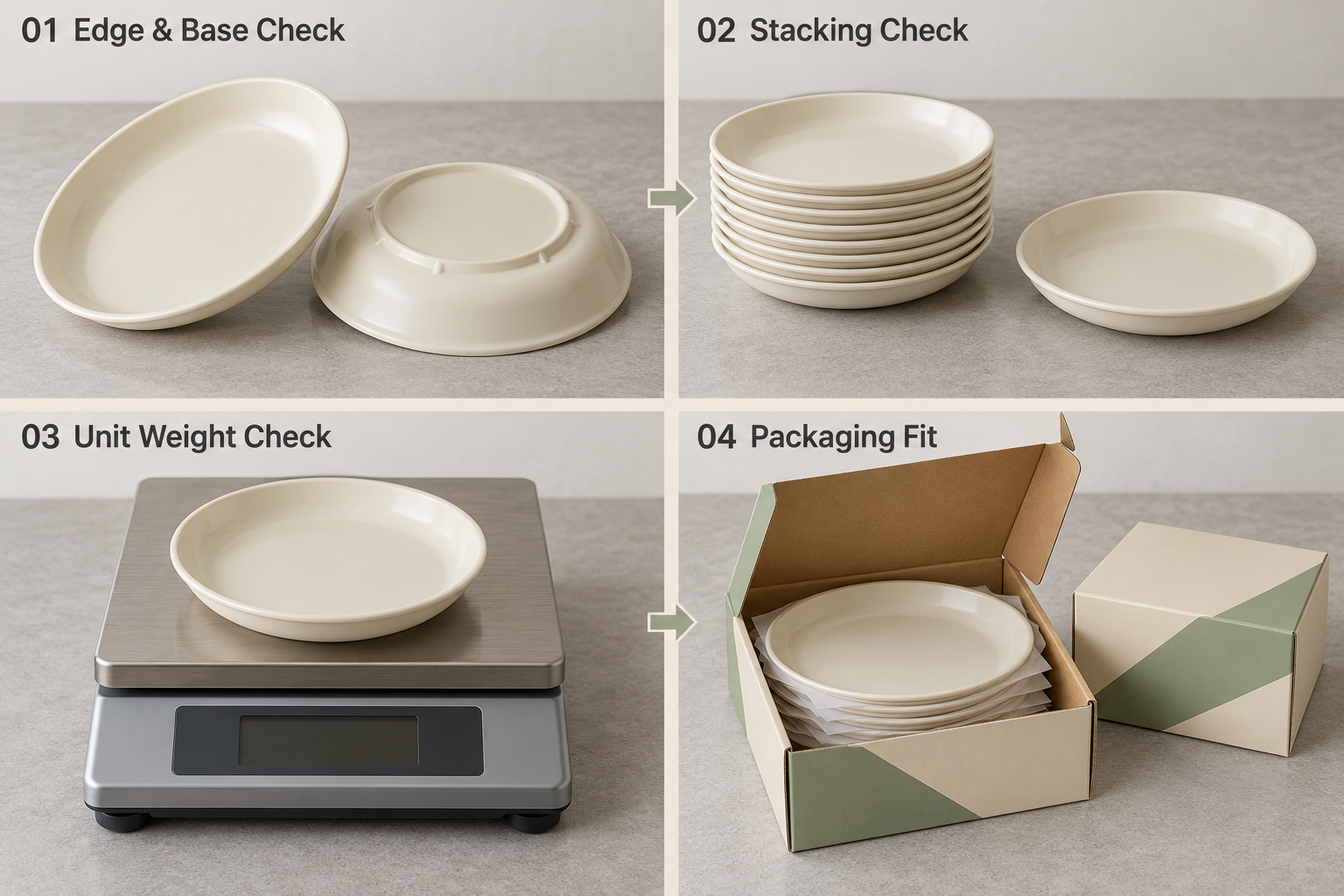
Before production, the agreed specification should identify the dimensions to check and any buyer-required tolerances. Samples are reviewed for size, shape, unit weight, edges, appearance and stacking as applicable. Existing-product samples usually take approximately 5–10 days; customized samples usually take approximately 10–20 days. New-mold projects require a separate timing review.
 MOQ, Tooling Costs and Packaging Effects
MOQ is usually around 500–2,000 pieces per model and color, but this range does not automatically apply to every new-mold project. Tooling requirements, material, order quantity and finishing affect the quotation. Development costs and responsibilities are confirmed separately.
A larger diameter, deeper profile or different stacking arrangement can also change packaging dimensions and shipment volume. Review pieces per pack and carton requirements through our custom packaging service before final approval.
Prepare Your Size and Shape Enquiry
Send drawings or reference photographs, required dimensions, material preference, target weight, quantity by model and color, packaging requirements and destination market. Include any testing or documentation needs.
Mass production usually takes approximately 25–40 days after sample and order confirmation, depending on the project. New tooling and sample revisions may add time before this stage. Agreed dimensions, weight, molding condition, edges and appearance are checked during quality inspection against the approved specification.