
Finishing Requirements for the Selected Product
Platvex Plasticware reviews finishing requirements for plastic plates, bowls, trays and related plasticware supplied to importers, wholesalers, distributors and OEM buyers. The work required depends on the material, molding route, product structure and approved sample.
Finishing focuses on details that affect handling and presentation: rough rims, visible molding residue, uneven edges and marks left during processing. Buyers should identify appearance expectations and any areas that need particular attention before sample approval. A wide plate rim, a bowl lip and the corners of a compartment tray require different review points.
Removing Flash and Reviewing Molding Residue
Thin excess material may appear along a mold parting line or around other molding features. Where removal is needed, the method must suit the material and leave the intended edge profile intact.
Gate areas also need review where they remain visible or affect handling. Removing excess material should not leave a sharp projection, a deep cut or an obvious surface mark. Repeated defects require attention to molding conditions or tooling rather than relying entirely on additional finishing.
Our Injection Molding page explains the upstream production stage for compatible thermoplastic products.
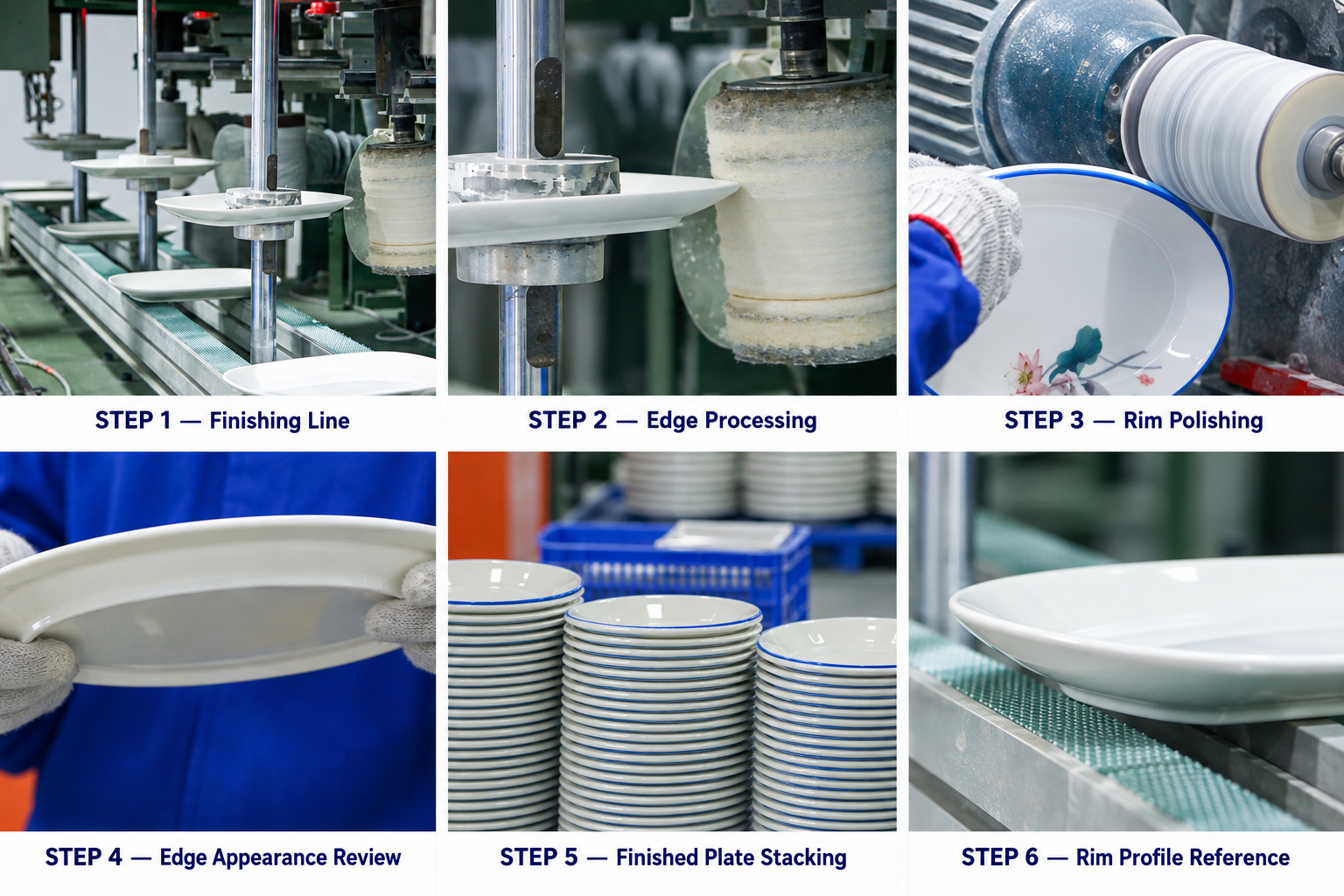 Matching Edge Processing to the Material
Thermoplastic and melamine products should not be assigned the same finishing procedure. Thermoplastic items may require localized trimming where appropriate. Melamine products follow their own molding and finishing route, with edge processing reviewed for the selected model.
Excessive processing can change the rim shape, create scratches or leave an uneven appearance. The objective is a clean, usable edge consistent with the approved product—not to apply polishing to every item.
If buyers request a different rim profile or corner shape, this should be reviewed during product development. Finishing has limited scope to change a structure established by the mold.
Approving Rim Shape and Surface Appearance
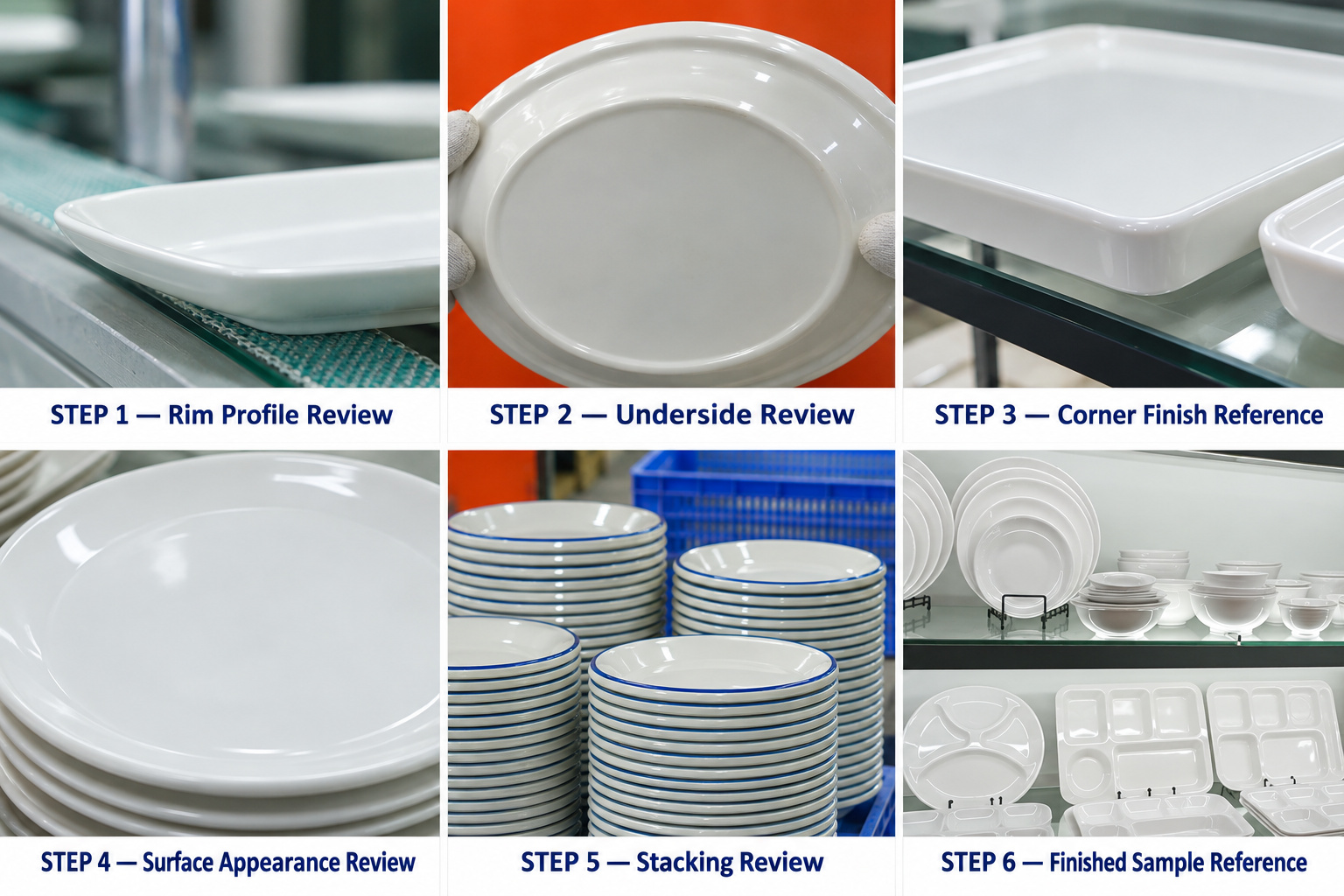
Sample approval should include the underside, rim and corners, as well as the main visible surface. These areas can be overlooked when buyers review only a front-facing product photograph.
Confirm whether small parting lines or gate marks are acceptable and identify locations where visible marks would cause concern. Requirements should use an approved physical sample and clear close-up photographs wherever possible.
For structural changes, Sample & Mold Development provides the appropriate stage to review edge geometry before bulk production.
Checking Finished Products Before Packing
Finishing checks focus on remaining flash, roughness, sharp projections, chips, scratches and uneven processing. Plate rims, bowl lips and tray corners receive attention according to the product structure.
Stacking is also reviewed where relevant. Items should sit together as intended without an edge defect causing catching or an unstable stack. Finishing does not replace dimensional inspection or correct significant molding distortion.
The Quality Inspection page covers the wider checks applied to product dimensions, appearance and packing.
 Confirming Costs, Scheduling and Packing Protection
Additional finishing can affect unit cost and production time, particularly when an order requires detailed work around multiple compartments or a tightly controlled visible rim. These requirements should be confirmed before quotation rather than introduced after production begins.
Packing preparation should protect finished surfaces from rubbing and handling damage. Stacking arrangements and any necessary separation depend on the product shape, decoration and agreed packaging.
For an OEM or bulk order review, send the product reference, material, quantity, intended use and photographs showing the required edge finish. Include any unacceptable defects, packaging requirements and delivery target so finishing expectations can be confirmed alongside the sample and production schedule.