
Confirming Inspection Requirements Before Production
Platvex Plasticware checks plastic plates, bowls, trays, food containers and cups against confirmed order specifications and approved samples. Inspection supports OEM and wholesale orders for importers, distributors, brands and private label buyers.
Before production, we confirm the product model, material, color, dimensions, decoration and packing requirements. Buyers should identify critical measurements, intended use and unacceptable defects. A plate ordered for stacked catering service has different review points from a container supplied with a matching lid.
Any buyer-specific inspection criteria should be agreed before the order is scheduled.
Checking Materials and Production Setup
Incoming material checks begin with confirming the specified material and color against the production requirements. PP, PS, HDPE, ABS and melamine resin are reviewed according to the selected product; these materials are not interchangeable across every model.
Setup checks establish a product reference before the production run continues. Early pieces are reviewed for appearance, shape and relevant dimensions. Material preparation and molding conditions need attention when recurring defects appear.
Our Material Preparation page explains the upstream checks that help establish a consistent production starting point.
 Reviewing Dimensions, Weight and Product Fit
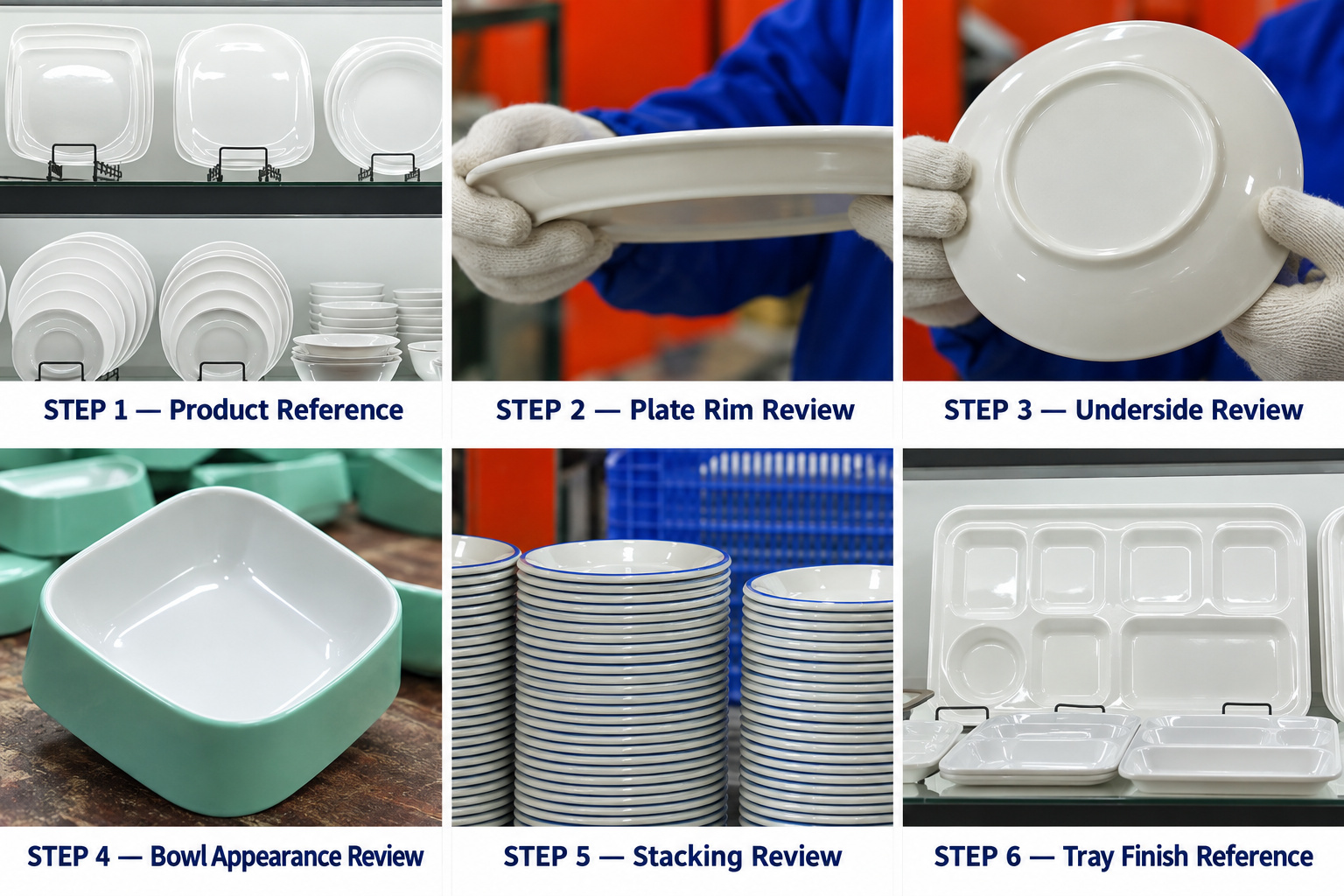
Dimensional checks focus on the measurements relevant to the order, such as plate diameter, bowl height, tray length and width, or container opening dimensions. Unit weight is checked against the agreed specification where required.
Products with matching components need fit checks. For a container and lid, the review includes how the parts seat together. Plates and bowls intended for stacking are checked for nesting and obvious instability.
Tolerances should be confirmed for the selected product rather than replaced with a general claim of “precise dimensions.” Sample approval provides a reference, but critical measurements still need written specifications.
Inspecting Edges, Surfaces and Decoration
Appearance checks cover visible scratches, discoloration, molding marks, chips and distortion. Rims, corners and underside areas are reviewed for remaining flash, roughness or sharp projections.
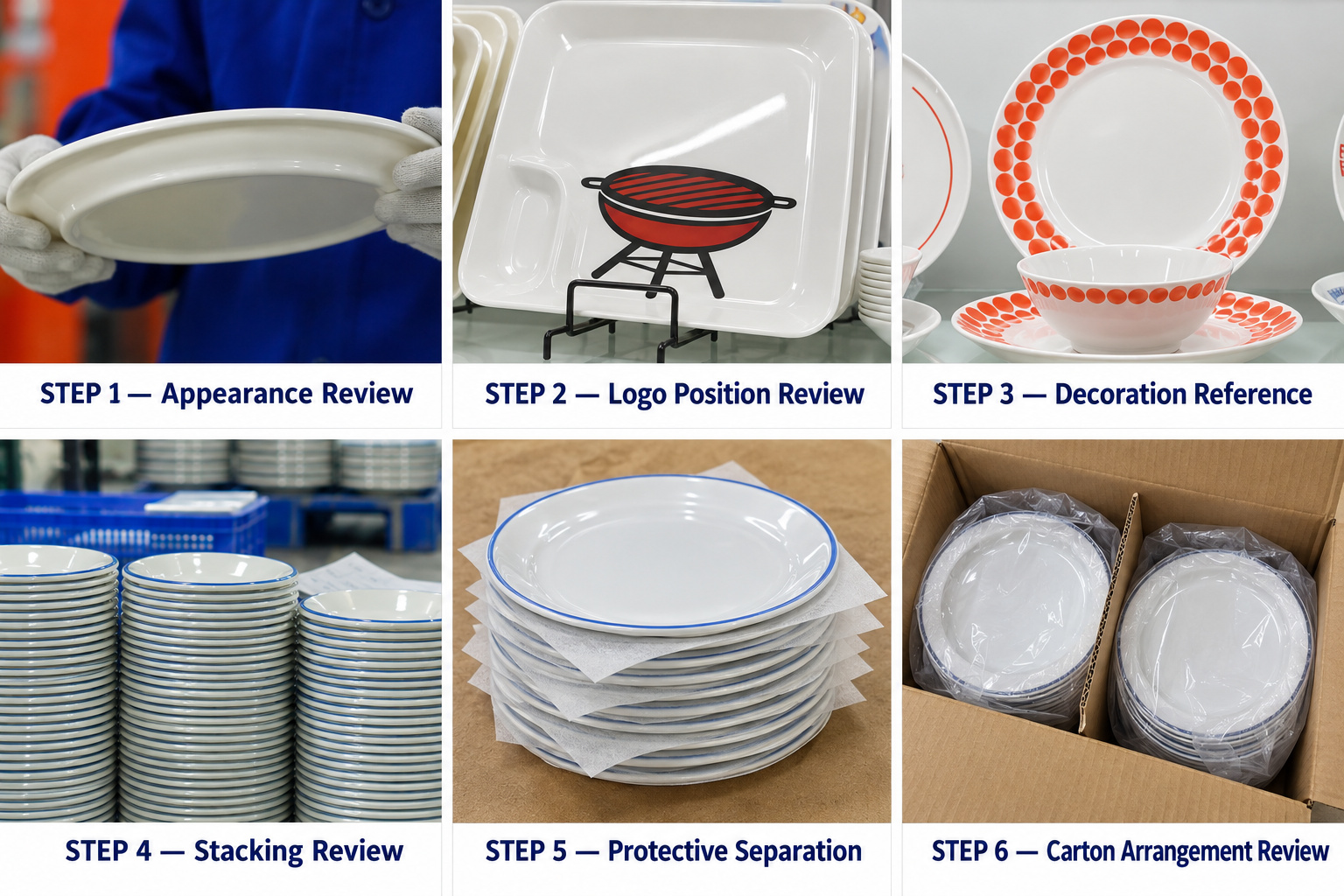
Printed products are compared with the approved decoration sample for position, legibility, color appearance, coverage and visible smudging. Additional print-performance checks require an agreed method and acceptance criteria.
Our Finishing & Edge Processing page explains how edge-related issues are addressed before finished product review.
Checking Packing Before Shipment
Packing checks confirm the product model, color assortment, quantity per pack, labels and carton marks against the order. Where protective separation is specified, its placement is also reviewed.
Pre-shipment checks bring together product appearance, packing condition and order identification. If a discrepancy is found, the affected items require review and correction before release.
See Packing & Export Preparation for the information needed to confirm packing arrangements.
 Agreeing Testing and Buyer Inspection Arrangements
Routine production inspection and laboratory testing serve different purposes. Visual, dimensional and packing checks do not establish food-contact compliance or suitability for microwave, dishwasher or temperature-specific use.
Third-party food-contact testing may be arranged according to the product, destination and buyer’s requested scope. Required tests, sample quantities, costs and timing should be reviewed before confirming the delivery schedule.
If your order requires an appointed third-party inspection, send the proposed checklist, sampling plan and inspection timing for feasibility review. Please include the product reference, quantity, approved specifications, packaging details and destination when requesting an inspection plan for your bulk order.