
Molding Products to Confirmed Order Specifications
Platvex Plasticware uses injection molding for suitable thermoplastic plates, bowls, cups, food containers and related products at our Huangyan, Taizhou manufacturing site. This production route supports wholesale orders, OEM color programs and repeat supply for importers, distributors and private-label buyers.
Before production, we confirm the selected model, material, dimensions, unit weight, color and quantity. These details establish the reference for molding and inspection. Melamine products follow a separate forming route and are not covered by this injection molding process.
Matching the Material, Mold and Product Structure
An existing mold is normally the starting point when its dimensions and structure meet the buyer’s requirements. Changes to plate diameter, depth, rim profile or compartments may require different tooling rather than a simple machine adjustment.
Material selection also affects the production route. PP, PS, HDPE and ABS are reviewed by product specification; availability does not mean every model can be produced in every resin.
Our sample and mold development process helps establish whether an existing model is suitable or a selected new-tooling project needs evaluation.
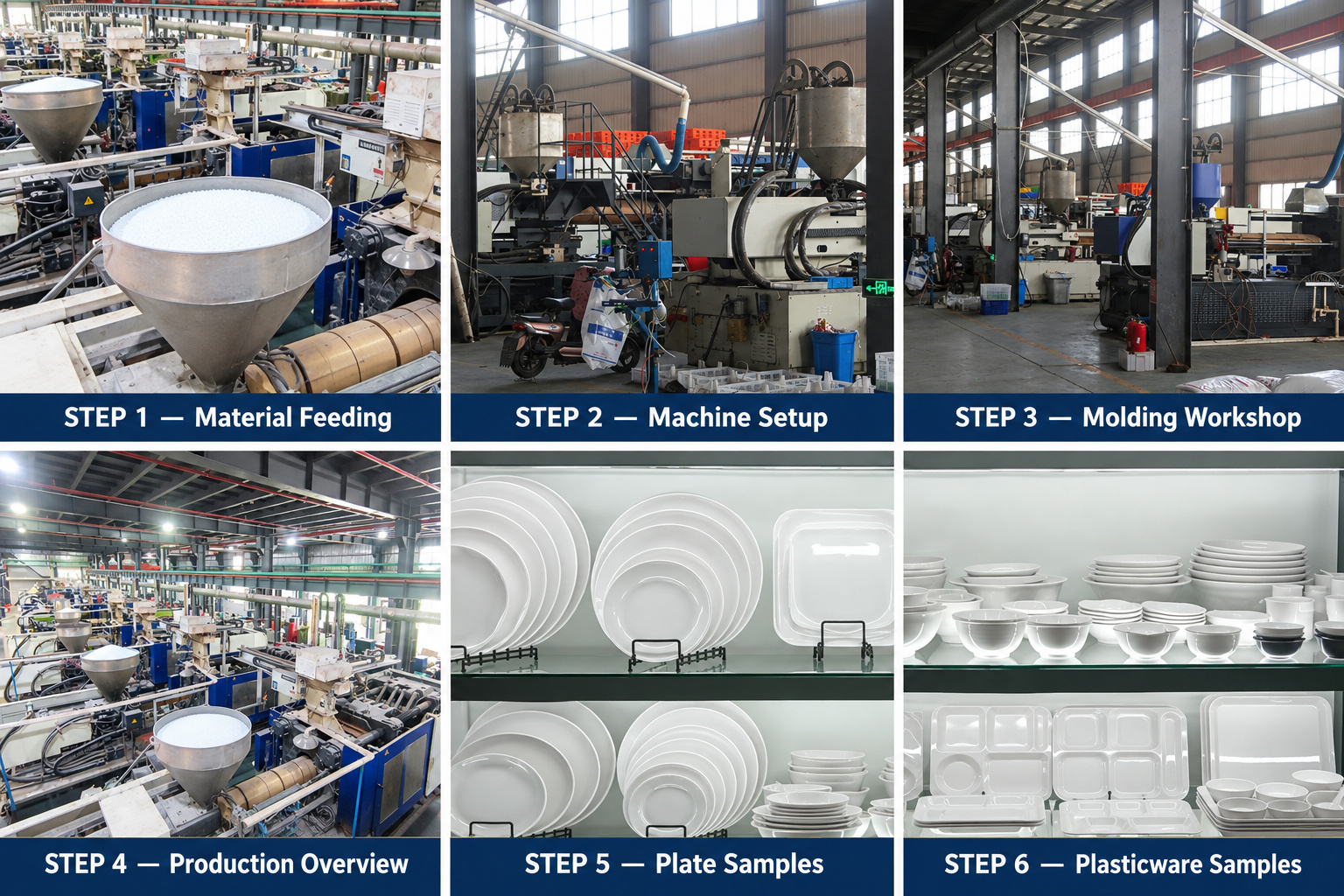 Preparing and Running the Molding Cycle
Resin, color or masterbatch and any required drying are prepared before the molding run. Production setup is checked against the confirmed order specification.
During the cycle, material is formed in the selected mold, cooled and released as a molded product. Setup and cooling conditions influence the finished dimensions, surface appearance and consistency. Our site operates around 30–40 injection molding machines, supported by feeding and drying equipment, mold temperature control and chillers.
The preceding material preparation stage keeps resin and color requirements connected to the approved product.
Checking Dimensions, Weight and Molding Condition
Production checks cover dimensions, unit weight, molding condition, edge condition and visible defects. For plates, the agreed diameter, depth and rim profile provide practical inspection points. Bowls and containers require checks appropriate to their structures.
Visible issues such as incomplete forming, excess material at edges or distortion need review against the agreed acceptance requirements. Unit weight is checked alongside dimensions; matching weight alone does not establish that a product meets the full specification.
Inspection requirements and any agreed tolerances should be confirmed before production. Our quality inspection page explains the broader checking scope.
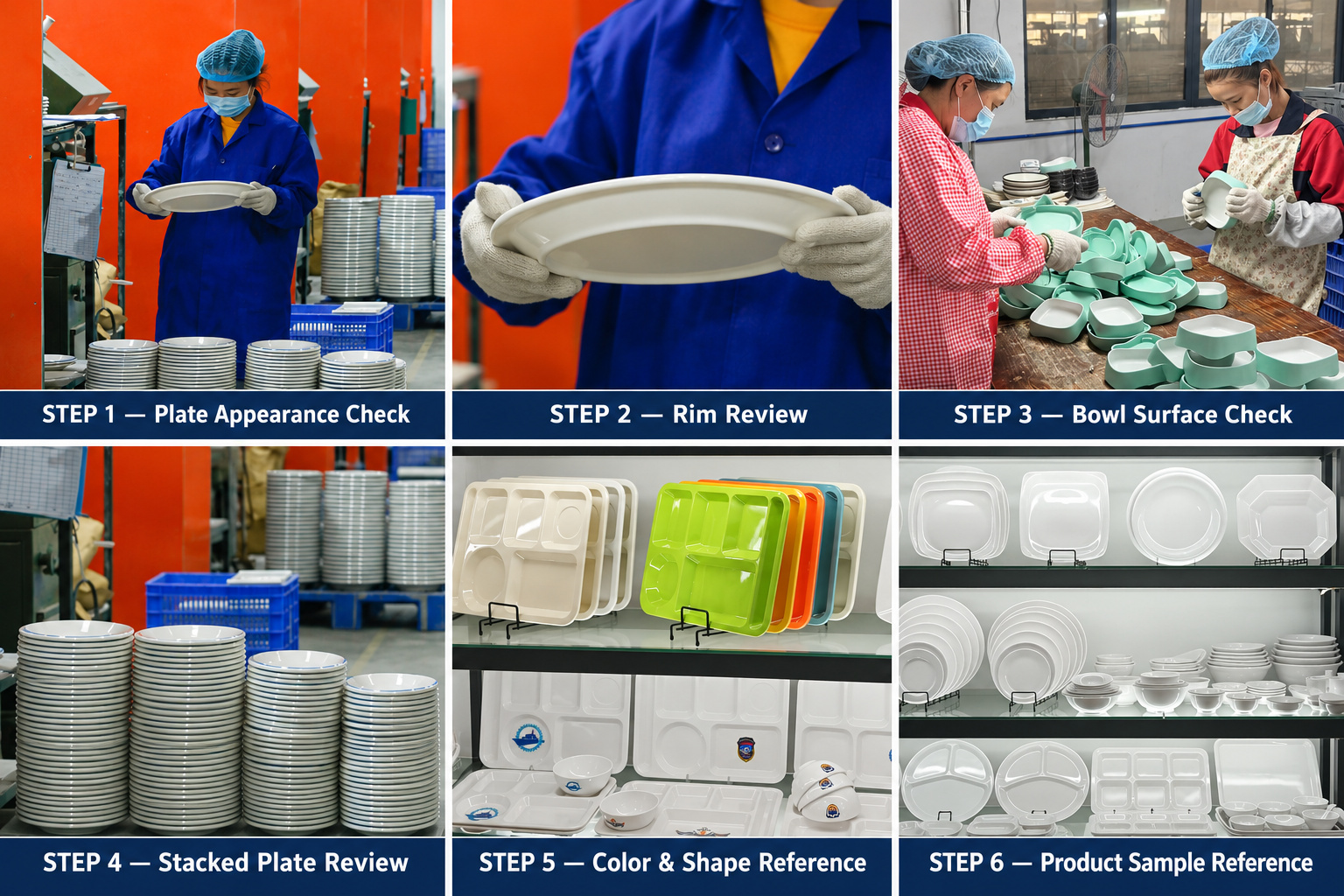 Moving Molded Products to Finishing and Packing
Molded products proceed to the finishing, decoration and packing stages required by the order. Plain products and printed products have different processing needs.
Color and surface appearance should be reviewed before decoration. Where logo printing is specified, the molded surface and available print area must suit the agreed method. Packing requirements also matter: product shape and stacking arrangement affect protection and carton configuration.
Changes to material, structure, decoration or packaging after approval can affect costs and scheduling.
Planning Your Bulk Molding Order
MOQ is usually around 500–2,000 pieces per model and color, depending on specification. Mass production generally takes approximately 25–40 days after sample and order confirmation; new-mold development requires a separate schedule.
Send the product reference, material, dimensions, target unit weight, quantity by color, decoration and packaging requirements. Include the destination market and any required testing. We will review the molding route, sampling needs and production timing before confirming the order.